


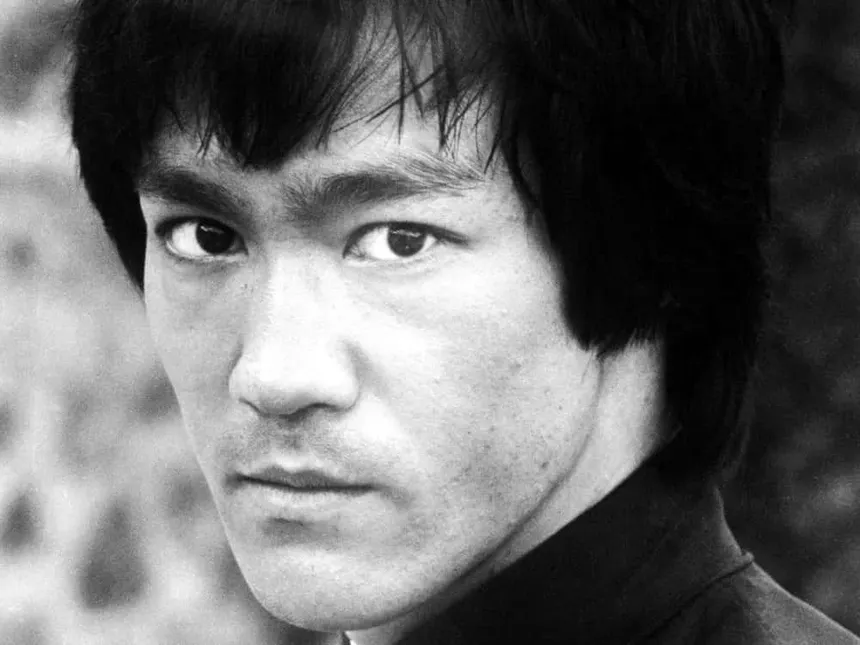
A bejegyzés magyar nyelven: A Bruce Lee márkanév
A bejegyzés angol nyelven:
In 2025, to mark the 85th anniversary of Bruce Lee’s birth, masters from numerous kung fu styles, including many Wing Chun masters, paid tribute to him.
The tributes were a truly beautiful gesture, but they raise the question: whom were they commemorating? The martial artist? The actor? The founder of Jeet Kune Do? Or was it simply a good PR stunt?
Time and again, I came across tributes on Facebook, not only from Hungary but also from other parts of the world.
It is commendable when one martial artist pays respect to another. However, the grandmasters of other martial arts styles deserve the same recognition! Ip Hok-ching, Morihei Ueshiba, Gichin Funakoshi, Masutatsu Oyama, and Jigoro Kano, to mention just a few well-known names.
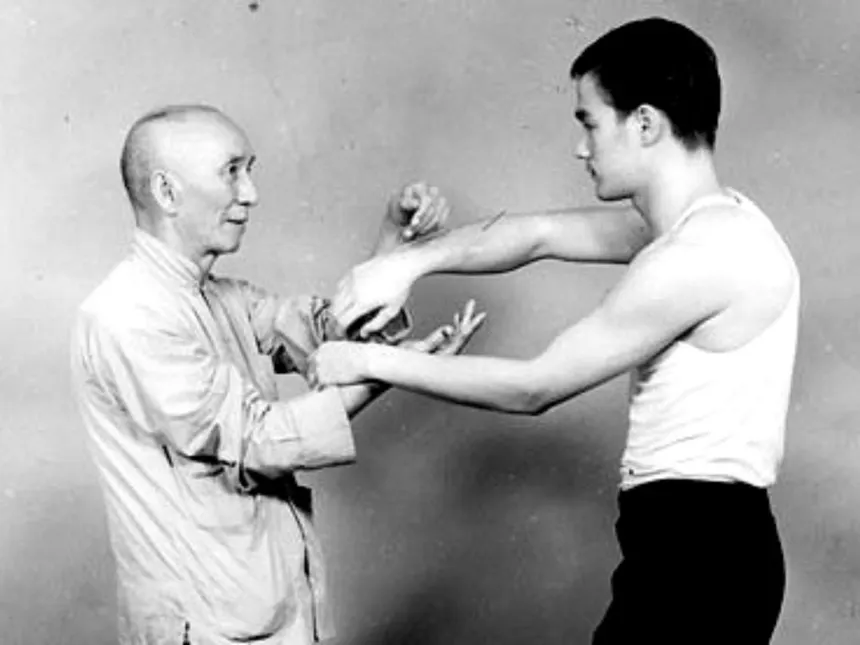
At Wing Chun demonstrations, it can be observed that a master from a particular school briefly recounts the history of their lineage. Then, when the story reaches Grandmaster Yip Man, Bruce Lee’s name is also mentioned as one of Yip Man’s students. They add that the world came to know the Little Dragon through his films, and that he was, indeed, a Wing Chun practitioner.
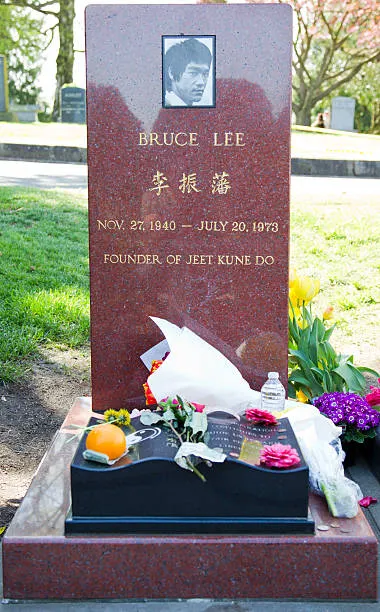
For some time, I have been asking myself why Bruce Lee’s name needs to be used as a kind of promotional tool. After all, as the inscription on his gravestone states, he was the Founder of Jeet Kune Do — and there is no mention of Wing Chun.
Therefore, claiming that he was, in essence, a Wing Chun practitioner strikes me as somewhat forced.
If one considers the matter objectively, perhaps this is all that needs to be said about Bruce Lee and his connection to Wing Chun. The films, available literature, and the recollections of his training partners and students never place particular emphasis on the Wing Chun lineage or highlight it as a defining aspect of his legacy.
Bruce Lee is indeed a figure in the history of Wing Chun, but he is not one of the defining figures in Wing Chun’s own history! And the fact remains that he did not carry on Yip Man’s original lineage.
We could jump straight to the conclusion at the end of this post, but readers who are interested in the reasoning behind it are invited to read the following explanation first.
Why Am I Writing About the Little Dragon Now, After All?
I spent quite some time thinking about whether I should write about Bruce Lee, but the tributes inspired me to do so.
As it happened, Bruce Lee crossed my path once again! This prompted me to revisit the question I had raised before.
That is why I would like to shed new light on a few ideas and draw attention to the fact that many masters seem to misunderstand Bruce Lee’s place in Wing Chun. In doing so, they may inadvertently undermine their own standing as well.
In this post, I am NOT going to recount Bruce Lee’s life story, nor do I intend to write about JKD, as I do not know enough about it to the extent I would like to. (Perhaps, after doing some research and delving deeper into the available information, I will dedicate a post to it in the future, along with posts about many other masters.)
I do not intend to go into the details of his life or the circumstances surrounding his tragic death, as numerous books and films have already been produced on these subjects.
Unfortunately, as a harmful consequence of artificial intelligence, an increasing number of videos are appearing that depict events involving Lee that never actually happened, creating a false impression of him among those unfamiliar with the facts.
This post will most likely prove controversial. But before we go any further, I would also like to pay my respects to Bruce Lee, the founder of Jeet Kune Do!
Let’s watch this video, which offers a look at his life, and take a moment to remember the Little Dragon!
(Those who are familiar with Bruce Lee’s biography can feel free to scroll down!)
Bruce Lee: A Favorite and Role Model Among Martial Artists!
I have heard many martial artists say that they began training in martial arts because Bruce Lee’s films had a profound influence on them.
I am one of them, although my physique would never allow me to imitate his movements or acquire the same physical abilities he possessed. Even so, despite these limitations, Bruce Lee’s philosophy and way of thinking continue to fascinate me to this day! (Unfortunately, many so-called words of wisdom have appeared on Facebook and been falsely attributed to Bruce Lee!)
I would like to take a slightly longer detour to highlight one important point: despite their many similarities, JKD and Wing Chun are NOT the same thing!!!
I will do so by looking at a few key stages in Bruce Lee’s life.
Let’s start with the fact that he began learning Wing Chun at the age of 13, training at Grandmaster Yip Man’s school. His exceptional talent and rapid progress aroused the envy of many.
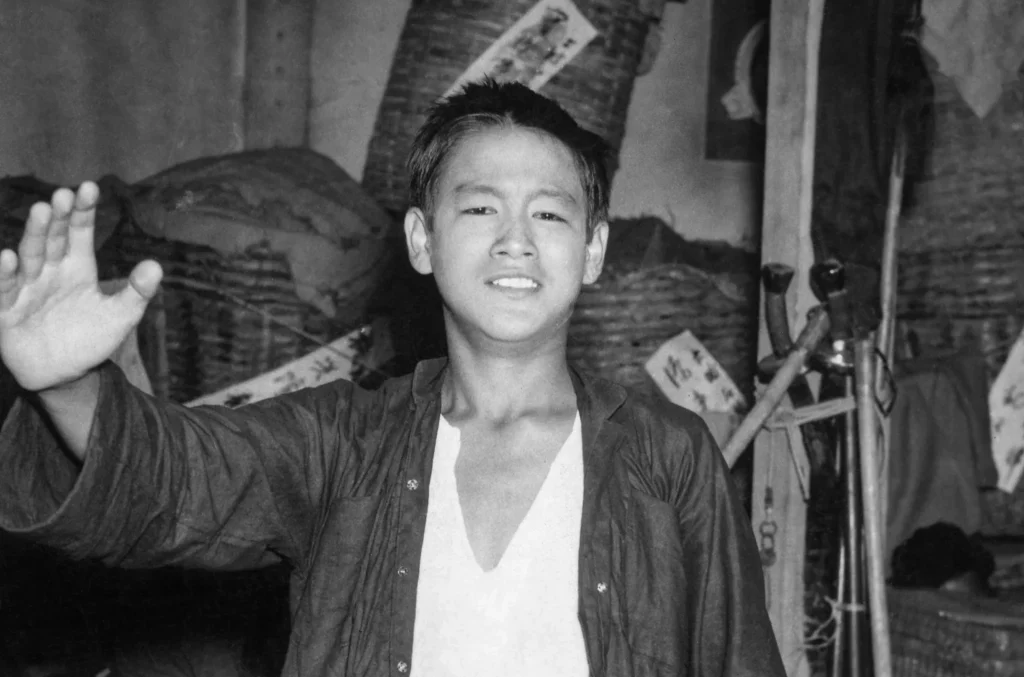
I believe that although Bruce Lee studied Wing Chun under Grandmaster Yip Man and practised it at a very high level, he ultimately left the world his own form of expression: JKD.
Lee’s place in the history of Wing Chun amounts to approximately five years, plus the additional periods when he returned to visit his master after the age of 18. By comparison, many Wing Chun masters around the world have practised their respective lineages for 40–50 years.
(I use the name Ving Tsun because Grandmaster Yip Man founded the Ving Tsun Athletic Association.)
Lee was undoubtedly highly knowledgeable in Ving Tsun, but we do not know what formal rank he might have attained in the style, as the system taught by Yip Man did not yet have a ranking structure at that time. No information about this can be found online, and the same appears to be true of his fellow students.
In Wing Chun, ranking systems are a relatively modern development, dating from around the 1970s!
Let us skip over the period Bruce Lee spent training under Grandmaster Yip Man! Many biographical accounts deal with this period in much the same way, covering it only briefly.
Let us make one thing clear once again: while many of Lee’s kung fu brothers went on to establish their own Wing Chun lineages and teach their respective systems as grandmasters, Bruce Lee founded his own martial art, which was NOT Wing Chun!!!
I emphasise this point because it seems to me that many people around the world overlook this fact.
He was exceptionally talented, a first-rate martial artist, and a reasonably accomplished actor as well.
During his short life, he shook up the martial arts world considerably.
He built his reputation partly through his films and, of course, also left a lasting legacy as a teacher and martial artist by founding his own combat system: JKD.
At the age of just 18, after approximately five years of Wing Chun training, he travelled to the United States, where he soon began teaching martial arts. Initially, his teaching was based on Wing Chun movements combined with techniques from other martial arts.
He eventually attracted numerous students, including celebrities such as Steve McQueen, James Coburn, James Garner, and Dan Inosanto. Even Chuck Norris †, one of the supposedly “invincible” martial arts heroes of our time, came into contact with him.
During his classes, Lee was not only teaching; it is entirely conceivable that he was learning as well, gradually incorporating his experiences into his own system.
He may subsequently have drawn on these experiences to develop his own style, JKD, which nonetheless bears recognisable similarities to Wing Chun.
Many people believe that masters cannot learn or improve when their training partners are less skilled than they are. This is not the case. Lee himself demonstrates that progress is possible.
It seems that quite a few of Lee’s experiences took him by surprise, and he sought to find solutions to the problems that arose as quickly as possible. He encountered variables that raised questions he needed to find answers to.
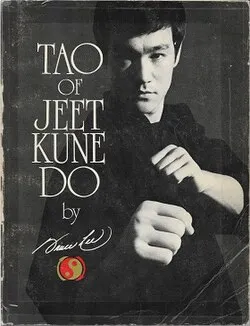
A Few Examples
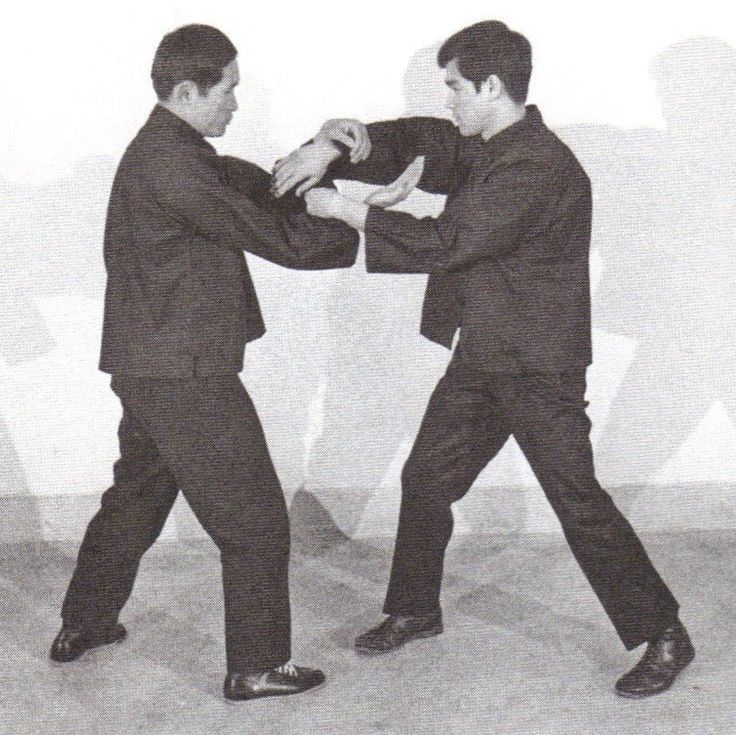
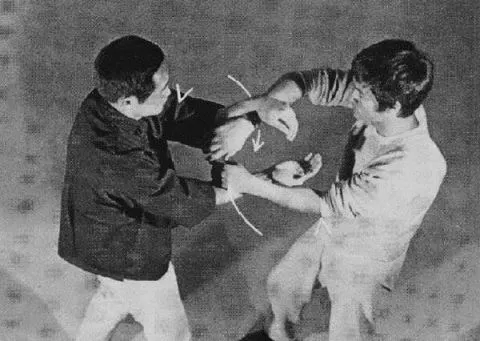
The Modified Stance Structure
Presumably, while practising Chi Sau, Lee encountered a problem arising from the fact that he was shorter than many of his American students. When practising Poon Sau (rolling arms) in the traditional training stance, he may have found it difficult to maintain his position against the greater physical strength of his students. One possible solution was to brace his stance from behind, adopting a fighting stance while practising Chi Sau.
Footwork
Lee was fascinated by Muhammad Ali’s (Cassius Clay’s) footwork. He studied it, imitated it, and made extensive use of it himself. Combined with the right strategy and tactics, this type of footwork can be an effective way to deal with a stronger opponent while operating at a longer range.
Another interesting fact is that fencing also influenced Bruce Lee’s footwork!
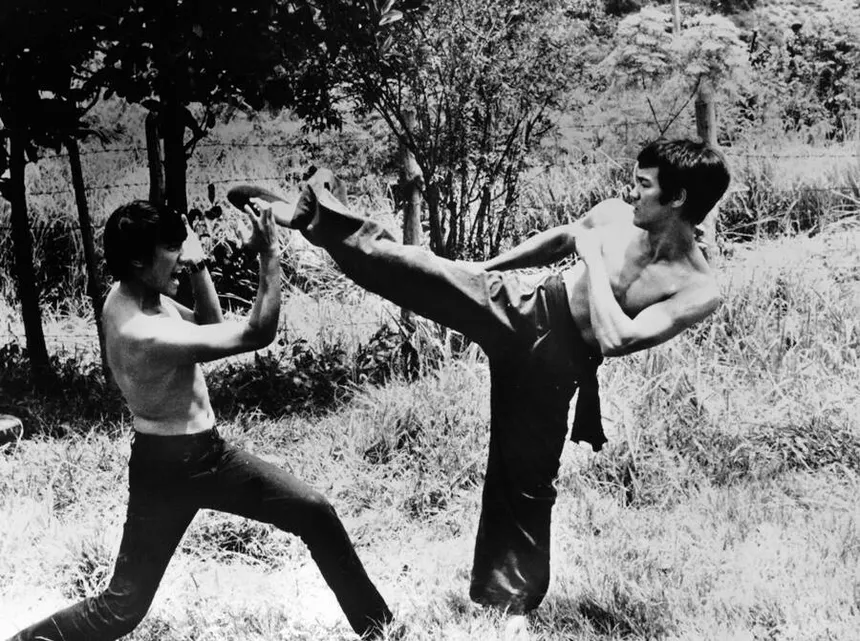
It is a well-known fact that Bruce Lee incorporated high kicks into his system at Chuck Norris’s suggestion. Traditional Wing Chun, by contrast, primarily employs low kicks.
The Legendary Punch
Another interesting example is the One-Inch Punch, which is primarily a demonstration technique and difficult to execute in real combat. As the video below shows, it is not particularly practical against a moving target, and even Lee himself did not use it in this context.
Many of the punches used in JKD resemble boxing punches, an influence that can be attributed in part to Muhammad Ali.
These punches, along with several kicks that are not typical of Wing Chun, can be observed in the video below.
Conclusion
I would now like to return to the original topic, the central point and message of this post! From this point onward, let us focus exclusively on Wing Chun.
I do not understand why Yip Man’s students, Bruce Lee’s kung fu brothers, and today’s Wing Chun grandmasters mention Lee when recounting the history of their own lineages.
I find this puzzling because even if Lee were considered a separate branch in the history of Wing Chun, he would still not be part of their own lineages.
There would be nothing wrong with mentioning him, of course. However, I cannot help but sense an underlying intention: promoting their own lineages! The Bruce Lee brand is an effective marketing tool!
Some might think that I am trying to diminish the standing of Yip Man’s students and their senior disciples. NO!
What I want to emphasise is that they do not need Bruce Lee to sell the greatness of their own systems.
Through their own styles and achievements, they have demonstrated that they have every reason to speak of their own accomplishments on a level at least equal to Lee’s.
Image sources:
365nap365film.blog.hu
allthatsinteresting.com
en.wikipedia.org
faroutmagazine.co.uk
istockphoto.com
kudosmemorabilia.com
kungfu.edu.pl
reddit.com


